How to Position Lights for a Well Designed Home
Lighting is one of the most important parts of a home interior. Even a beautifully designed space can feel uncomfortable if the lights are placed in the wrong positions.
Good lighting is not just about choosing attractive fixtures. The position, direction, brightness, and purpose of each light should be planned according to how the room will be used.
Here are some important things to consider when planning lighting for your home.
1. Start With the Purpose of Each Space
Different areas need different types of lighting.
For example:
Living rooms need general and accent lighting
Kitchens need bright task lighting
Bedrooms need softer, comfortable lighting
Study areas need focused lighting
Dining areas benefit from focused lighting above the table
Wardrobes may need dedicated internal lighting
Pooja units can use subtle accent lighting
Instead of placing the same type of light throughout the home, plan the lighting according to the function of each space.
2. Position Ceiling Lights According to the Room Layout
Ceiling lights should be positioned based on the furniture and circulation of the room.
Avoid placing every spotlight at equal distances simply because it looks symmetrical on the ceiling.
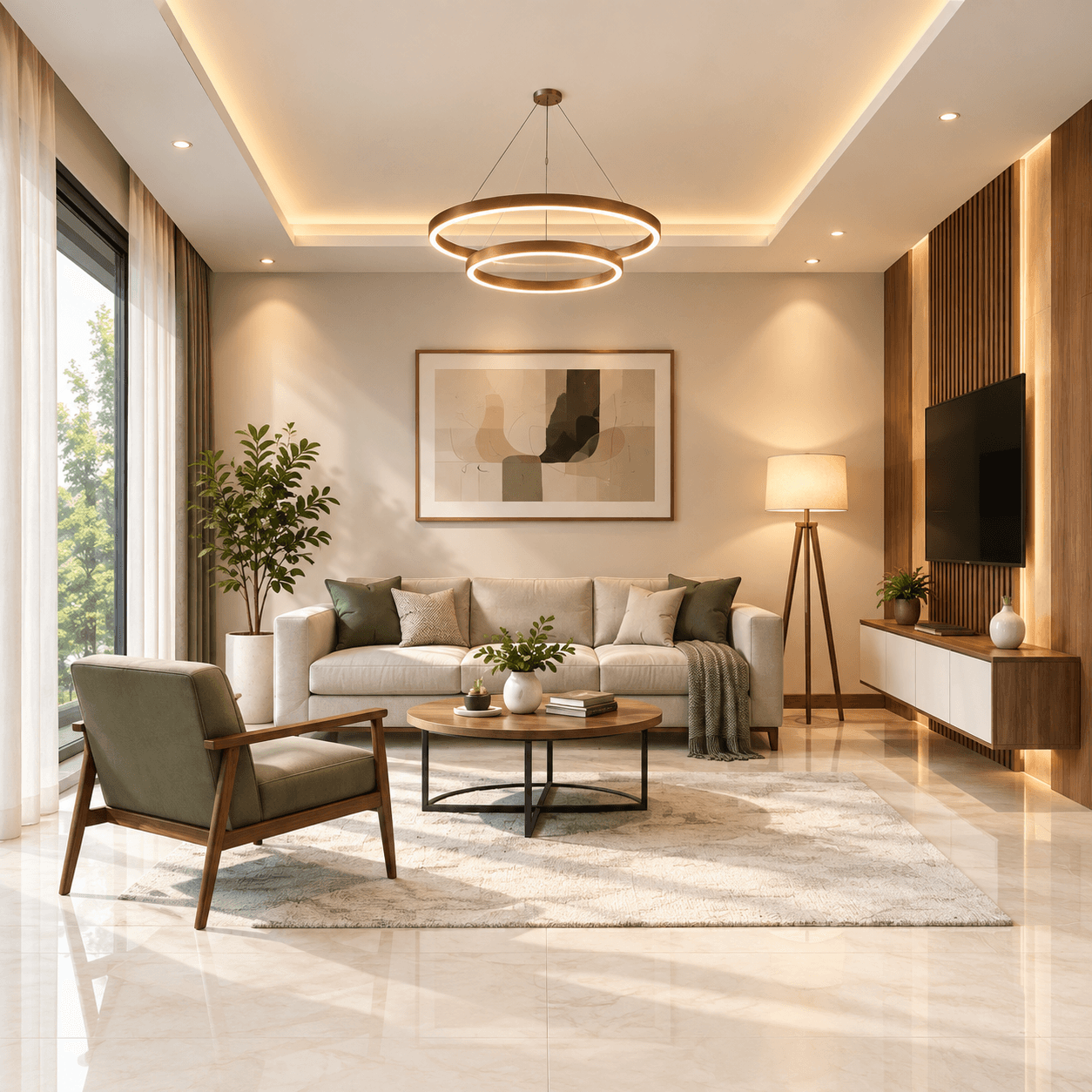
For example, in a living room, lights can be positioned to illuminate important areas such as the seating space, circulation areas, or selected walls.
The position should work with the furniture layout rather than against it.
3. Use Task Lighting Where You Need Focused Light
Some areas require more direct lighting for everyday activities.
In a kitchen, lighting can be planned over:
Countertops
Cooking areas
Sink areas
Breakfast counters
Storage and work zones
Under-cabinet lights can also help illuminate the countertop without creating shadows from overhead cabinets.
Similarly, study tables, dressing areas, and workspaces benefit from dedicated task lighting.
4. Use Accent Lighting to Highlight Important Features
Not every light needs to illuminate the entire room.
Accent lighting can be used to highlight:
Artwork
Textured walls
Display shelves
TV units
Architectural features
Pooja units
Decorative elements
A properly positioned spotlight can draw attention to a feature without making the entire room excessively bright.
5. Plan Bedside Lighting Carefully
Bedrooms need comfortable lighting rather than excessive brightness.
Bedside lights can be positioned through:
Wall-mounted lights
Pendant lights
Table lamps
Reading lights
The light should be positioned so it is useful for reading or other activities without shining directly into the eyes.
The position of switches should also be considered during the interior planning stage.
6. Position Dining Lights Around the Table
A dining light should relate to the position and size of the dining table.
Pendant lights are generally positioned above the table so that the dining area receives focused illumination.
If the dining table is moved or changed later, poorly planned lighting can look off-centre. This is why the furniture layout should be finalized before fixing the lighting points.
7. Avoid Direct Glare
A light can be bright without being comfortable.
Direct glare can occur when a light source is positioned where it shines directly into someone's eyes or reflects strongly from glossy surfaces.
When positioning lights, consider:
Viewing direction
Ceiling height
Reflective surfaces
Furniture placement
Light beam direction
Good lighting should make the room comfortable to use, not just brighter.
8. Don't Overuse Spotlights
More lights do not always mean better lighting.
Too many spotlights can make a ceiling look crowded and can create unnecessary brightness.
Instead, combine different types of lighting such as:
General lighting
Task lighting
Accent lighting
Cove or indirect lighting
Decorative lighting
This creates a more balanced and functional interior.
9. Plan Lighting Before the Interior Work Begins
Lighting positions should ideally be decided before the false ceiling, wardrobes, kitchen, and other interior elements are finalized.
The electrical points need to coordinate with:
Furniture layout
False ceiling design
Kitchen cabinets
Wardrobes
TV units
Bedside units
Mirrors
Decorative features
Planning everything together helps avoid situations where a spotlight ends up behind a wardrobe or a pendant is not aligned with the dining table.
10. Think About the Room as a Whole
The best lighting design does not depend on one type of light.
A well-planned room combines different sources of light to create the right balance between function, comfort, and visual appeal.
The goal is not to make every corner equally bright. It is to place the right light in the right position for the way the space is used.
Final Thoughts
Good lighting starts with good planning. The position of each light should be considered along with the room layout, furniture, ceiling design, activities, and surfaces.
When lighting is planned properly, it can improve both the function and overall appearance of your interior without relying on excessive fixtures.
At QUAD Interiors, lighting and interior elements are planned together so that kitchens, wardrobes, furniture, false ceilings, and other interior features work as one complete design across Kerala and South India.
📞 Contact Us Today for a free consultation and let’s create your dream interior!
📍 Location: Muthiraparamb, Near Calicut University, Kerala
🌐 Website: quad.org.in
📩 Email: info@quad.org.in
📞 Phone: +91 9605080303